
Why Site Speed Decides Whether Global Buyers Stay on Your B2B Website
Open any B2B website as a buyer and your first impression forms within seconds: do the images load quickly, does the page scroll smoothly, does this supplier feel professional and reliable? If your site takes ten seconds to show a product photo, many overseas buyers will quietly close the tab and open your competitor’s instead — and you will never know that inquiry existed.
We take this seriously, which is why we recently completed a major infrastructure upgrade on our own site: we migrated all product images to Cloudflare R2 cloud storage and switched on full CDN global acceleration. Here’s why it matters for any seller serving international buyers, and what it changed for us.

Why speed is a sales issue, not a technical one
In B2B purchasing, product images are the core source of decision-making information. Clear details, real workmanship, accurate specifications — all of it depends on images loading fast and completely. In the past, our images lived on the same server as the website, so overseas visitors had to cross an ocean and make repeated round trips to the origin server just to view a product gallery. Speed suffered noticeably with every network hiccup.
Our goal was straightforward: a buyer in any country should be able to browse our products as smoothly as if the site were local.
What we actually did
The upgrade came down to three moves:
- Migrated all product images to Cloudflare R2 object storage — professional-grade cloud storage with multi-region redundancy and eleven nines of data durability.
- Enabled Cloudflare CDN global acceleration — requests are now answered by the nearest of Cloudflare’s 300+ edge locations around the world instead of routing back to our server.
- Applied long-cache policies for static assets — common images are served straight from edge nodes, cutting repeated origin requests, which loads pages faster and reduces server load at the same time.
The measured results
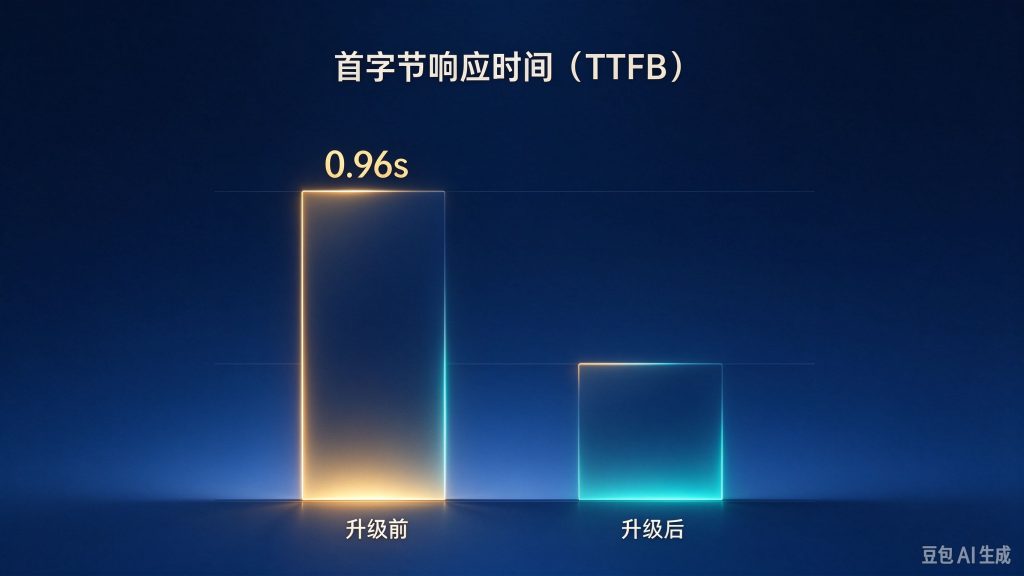
Whether an upgrade works shouldn’t be a feeling. It should be a measurement. After the migration we ran real tests: product images served from an edge cache hit a first-byte response time of roughly 0.96 seconds, and static assets now carry a cache lifetime of up to 30 days, so the vast majority of requests are answered from the node closest to the visitor.
Whether you’re in Europe, North America, the Middle East, or Southeast Asia, the loading experience is now nearly identical. That is the whole point of a CDN: distance no longer decides speed.
More stable: images decoupled from the main site
Speed wasn’t the only gain. Product image storage is now fully decoupled from the main site. If the website itself goes down for maintenance or takes a sudden traffic spike, the product images remain available. R2’s high-availability design also adds a stronger guarantee for the safety and durability of the image data itself. For a buyer, this means one simple thing: the image you want to see is always there.
Fast loading is a trust signal
A smooth browsing experience is itself proof of professionalism. A company website that opens quickly and reliably from any corner of the world says something about how that company handles details and customer experience. Slow galleries, broken thumbnails, and endless spinners tell the opposite story, no matter how good the products are. In B2B, trust rarely starts with a promise. It starts with one click that just works.
We’re not done yet
This upgrade was step one. We’re now working on dynamic page acceleration and image format optimization (WebP) to make every visit faster and smoother. In our view, continuous investment in infrastructure is part of the promise we make to customers. Visit www.okrvv.com and feel the difference yourself.